
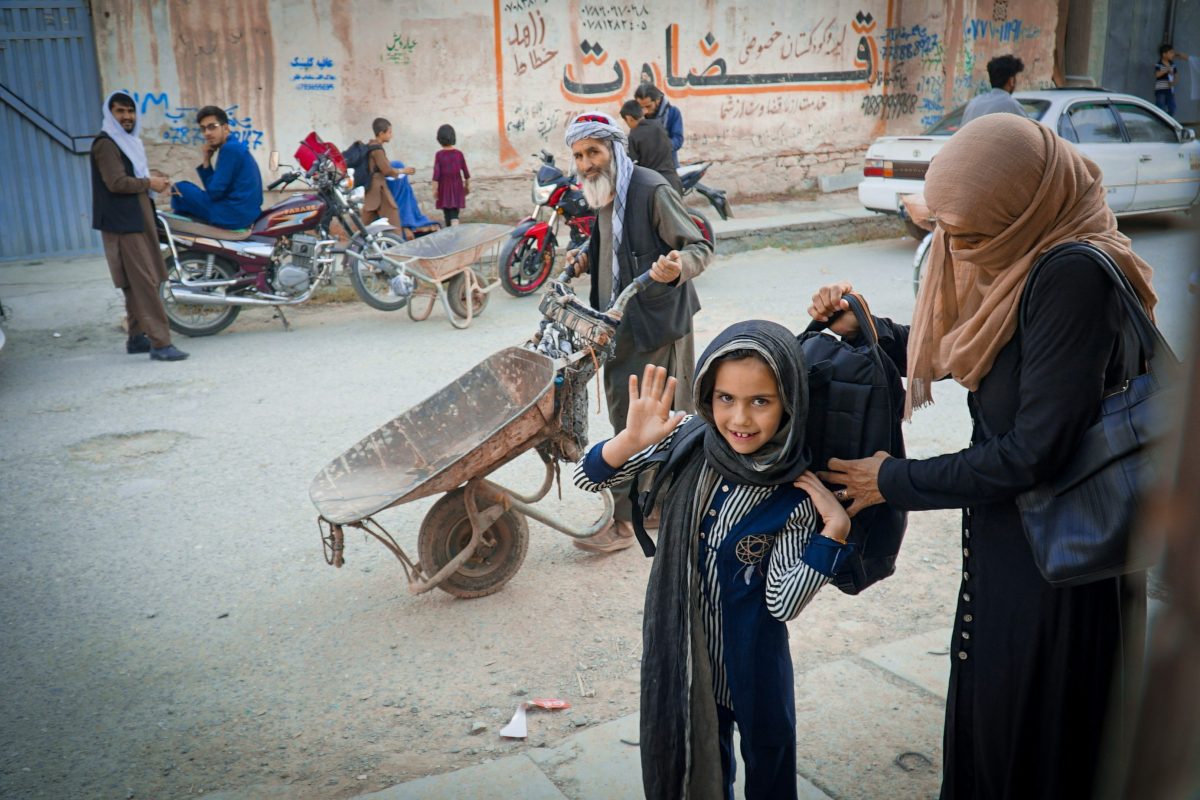
 ©Wanman uthmaniyyah via Unsplash
The United Nations Mission in Afghanistan UNAMA is uneasy about the change in the law in Afghanistan.
The United Nations Assistance Mission in Afghanistan (UNAMA) expresses grave concern over the promulgation of Decree No. 18 by the de facto authorities in Afghanistan. The decree, which establishes the rules for the separation of spouses, represents another step in the erosion of the rights of Afghan women and girls and perpetuates further systematic discrimination in law and practice.
The published decree, announced by the de facto Ministry of Justice on May 14, 2026, establishes the grounds on which women can petition for judicial divorce. It operates within a highly unequal framework: while men unilaterally retain the right to divorce, women must follow a complex and restrictive judicial procedure to separate from a husband. The situation confirms structural discrimination and limits women's autonomy in matters fundamental to their dignity, security and well-being. UNAMA writes this in a press release.
"Decree No. 18 is part of a broader and deeply troubling development that further erodes the rights of Afghan women and girls," said Georgette Gagnon, deputy special representative of the Secretary-General and acting head of UNAMA.
"The decree further institutionalizes discrimination and, combined with restrictions on girls' education and women's public participation, it solidifies a system in which Afghan women and girls are denied autonomy, opportunities and access to justice," Ms. Gagnon said.
UNAMA stressed that Decree No. 18 should be seen in the broader context of measures affecting women's rights since the de facto authorities took power in 2021. An initial decree in December 2021, the "Special Decree on Women's Rights," recognized certain rights for women, including consent to marriage and inheritance rights.
Subsequent decrees, however, have eroded these protections and curtailed women's autonomy before, during and after marriage. Decree No. 12 (2026), for example, introduced limited judicial intervention within marriage, but only in cases where women have been severely abused, with a penalty of 15 days in prison for husbands found guilty of serious abuse.
The impact of Decree No. 18 on girls is of particular concern. By devoting a chapter to divorce for girls who have reached puberty and are married, the decree gives the impression that child marriages are permitted. It also allows a girl's silence when she reaches puberty to be construed as consent to marriage. This undermines the principle of free and full consent and falls short of protecting the best interests of the child.
The measures taken by the de facto authorities since August 2021, including the ban on secondary and higher education for girls as well as restrictions on women's access to employment, have deprived millions of Afghan women and girls of their right to education, weakened their economic participation and deepened poverty, with long-term consequences for Afghanistan's development. To this end, Decree No. 18 magnifies existing inequalities by restricting women's freedom of action in the areas of marriage, divorce and access to justice.
UNAMA reiterates that Afghanistan is bound by its international human rights obligations, including the obligation to eliminate discrimination against women and protect the rights of the child. UNAMA therefore calls on the de facto authorities to align their laws, policies and practices with their international human rights obligations, including by ensuring consent to marriage, prohibiting child marriage, ensuring access to justice and protecting the rights and dignity of all persons.
©Wanman uthmaniyyah via Unsplash - illustration image of a street in Afghanistan