
World
Politics
Society
Weird & strange
“If I still don’t agree, we’ll just shoot at them again and drop bombs on their heads”
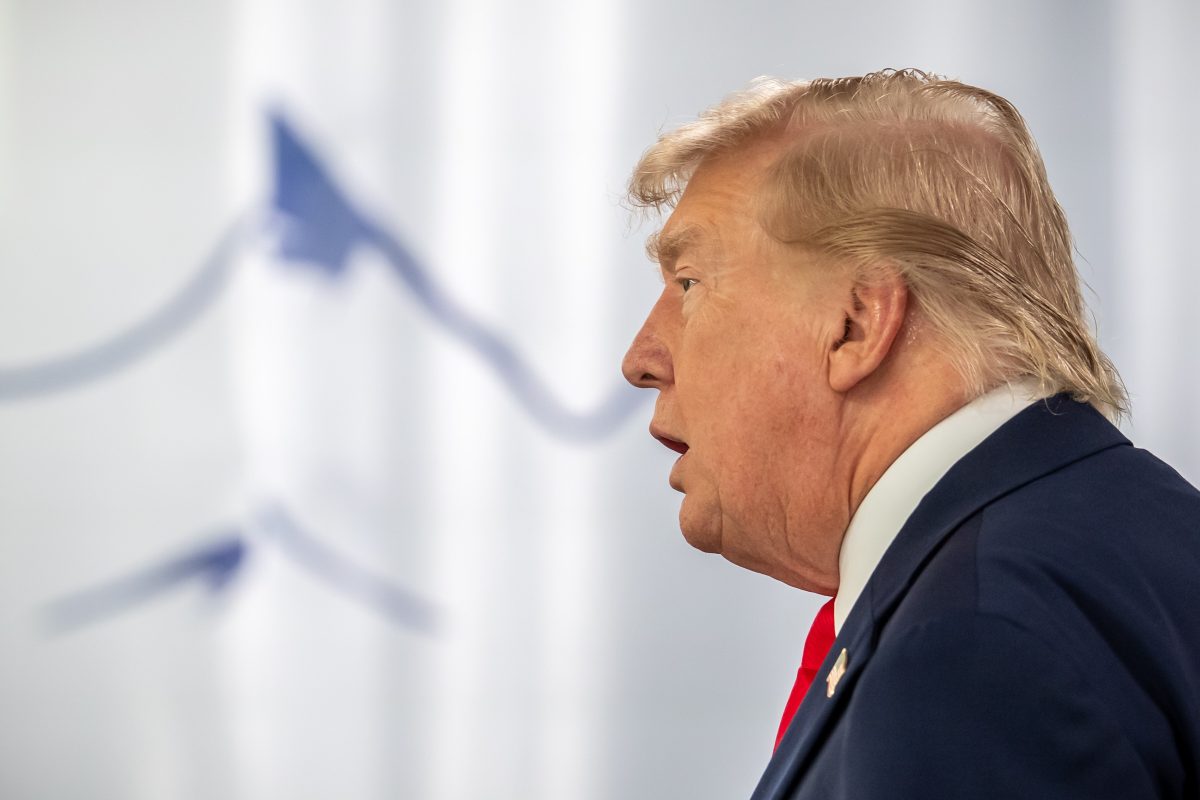 ©picture alliance/dpa/dpa-Pool | Michael Kappeler
The United States and Iran reached a preliminary agreement on Sunday evening aimed at ending their conflict. The breakthrough was first reported by the Pakistani prime minister and later confirmed by both Tehran and U.S. President Donald Trump. Many details remain unclear, but the outlines of the agreement are beginning to take shape.
According to Trump, the strategically crucial Strait of Hormuz will be fully reopened on Friday. At the same time, the United States would lift its naval blockade of Iranian ports. The official signing is scheduled for June 19 in Bürgenstock, Switzerland, a luxury resort that often serves as a diplomatic venue.
Nevertheless, Trump emphasizes that the agreement is “not final.” During the G7 summit in Évian-les-Bains, France, he left the door open: If Iran does not abide by the terms, he does not rule out military intervention. “If they don’t behave, we’ll start shooting at them again,” he said sharply. At the same time, he indicated that he intends to submit the text of the agreement to the U.S. Congress and may even read it aloud in public.
According to Vice President JD Vance, a key part of the agreement is that Iran will once again allow international nuclear inspections. That point is crucial for Western countries, which, after all, want to prevent Tehran from developing nuclear weapons.
Internationally, the agreement has been met with cautious optimism. Russian Foreign Minister Sergey Lavrov expressed his support and called on all parties involved, including Israel, to respect the terms of the agreement. At the same time, Moscow warned that the Israeli offensive against Hezbollah in Lebanon could pose a threat to the fragile balance.
Support also came from religious circles. Pope Leo XIV called the agreement an “encouraging result of patient dialogue and negotiation” and expressed hope that it would contribute to stability in the Middle East. NATO Secretary General Mark Rutte called it a “huge step forward” and emphasized that the alliance stands ready to help if necessary.
Meanwhile, parts of the agreement have already been leaked through media outlets such as Bloomberg and Al Arabiya. It reportedly includes fourteen points, among them U.S. support for Iran’s reconstruction, at an estimated cost of $300 billion. Iranian media, however, claim that the leaked version is incomplete and contains inaccuracies, including regarding the arrangement concerning the Strait of Hormuz. For example, Iran itself announced its intention to charge “service fees” for passage through the strait, a provision that does not appear in all versions of the document.
Iranian President Masoud Pezeshkian calls it a diplomatic victory and emphasizes that his country must not let this opportunity slip away. Iran has been grappling with severe economic problems for years due to international sanctions, which have been further exacerbated by the conflict.
Following Friday’s signing, a new 60-day round of negotiations will begin, during which the most sensitive issues—such as Iran’s nuclear program—will be further addressed. Whether the current framework agreement will effectively lead to a lasting peace agreement remains uncertain for now.
©picture alliance/dpa/dpa-Pool | Michael Kappeler