
 © picture alliance / ROPI | Maria Grazia Picciarella/R
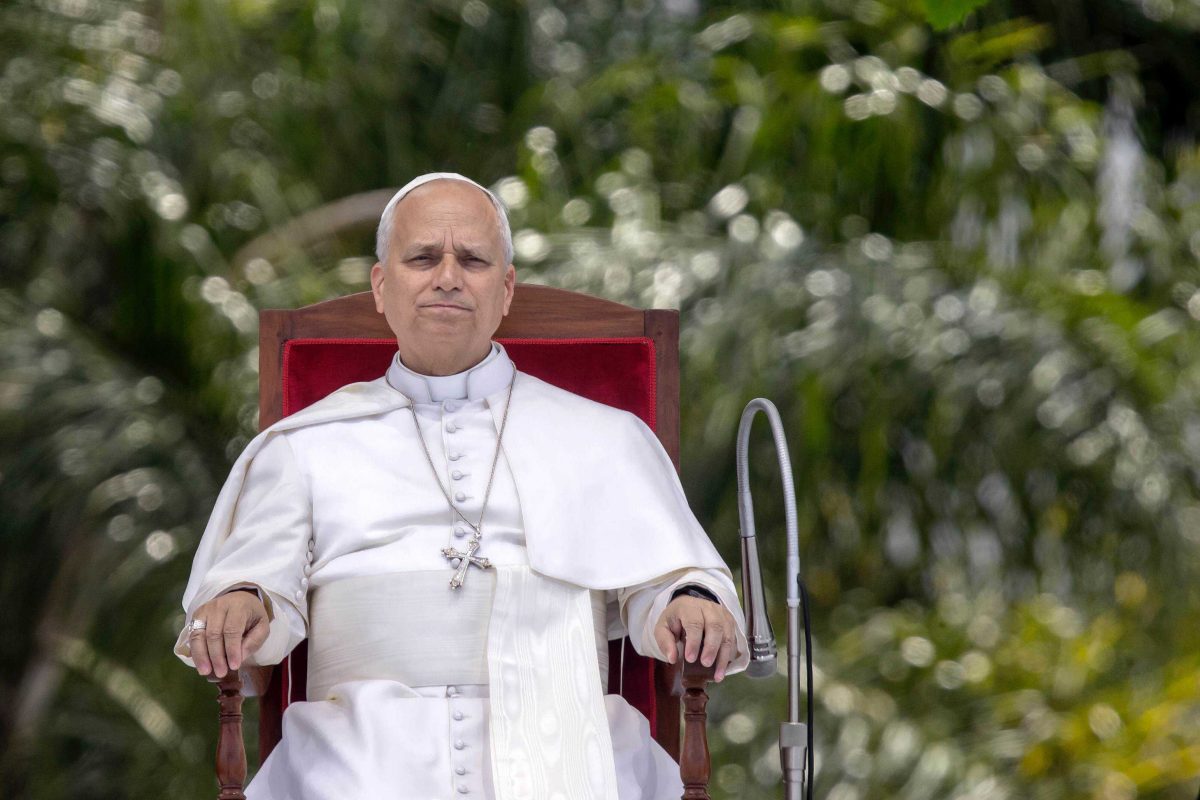
Pope Leo XIV presented his first encyclical, "Magnifica Humanitas," on Monday. In it, he outlines his desire to protect human dignity and freedom of choice in an age of artificial intelligence.
Pope Leo XIV published "Magnifica Humanitas" ("Magnificent Humanity"), a comprehensive papal encyclical addressing the moral, social and economic challenges of artificial intelligence. The document, which he and Christopher Olah, co-founder of Anthropic, presented as a symbolic gesture of dialogue between spiritual and technological leadership, calls on governments, businesses and individuals to protect human dignity in the age of AI.
The encyclical warns that AI-driven automation threatens to make large parts of the workforce obsolete. "A society that, despite a high level of technical development, guarantees employment to only a small part of the population risks exposing many to forced inactivity, a lack of responsibility and the absence of daily tasks and incentives, leading to human and cultural impoverishment," the pope writes. "This leads to a paradox of material progress and anthropological decline that undermines the foundations of a just and stable social peace."
He explicitly rejects the idea that the pursuit of profit can justify the systematic destruction of jobs and warns against the ideology that "suggests that everyone must earn or justify his or her own value, to the point where more value is assigned to those who are more efficient or effective."
Concrete proposals
His concrete calls to action include: government regulation of AI companies, retraining programs for laid-off workers, critical AI education in schools and better protection of children from online dangers.
The pope also wants to impose the "strictest ethical restrictions" on weapons developed with the help of artificial intelligence: "The increasing ease with which autonomous weapons systems can be deployed makes war more 'feasible' and less subject to human control." According to the pope, this is inconsistent with the principle "that armed force should be used only as a last resort in cases of legitimate self-defense".
Not coincidentally signed on May 15
Leo officially signed the encyclical as early as May 15, the 135th anniversary of "Rerum Novarum," the 1891 encyclical by his namesake Leo XIII that defended workers' rights during the Industrial Revolution. The parallel is not coincidental: just as that document guided Catholic social teaching through the industrial revolution, "Magnifica Humanitas" aims to do the same for the AI era.
Picture: © picture alliance / ROPI | Maria Grazia Picciarella/R