
World
Politics
Society
“Leave on your own or you’ll end up in a coffin”: Anti-immigrant protest spirals out of control in South Africa
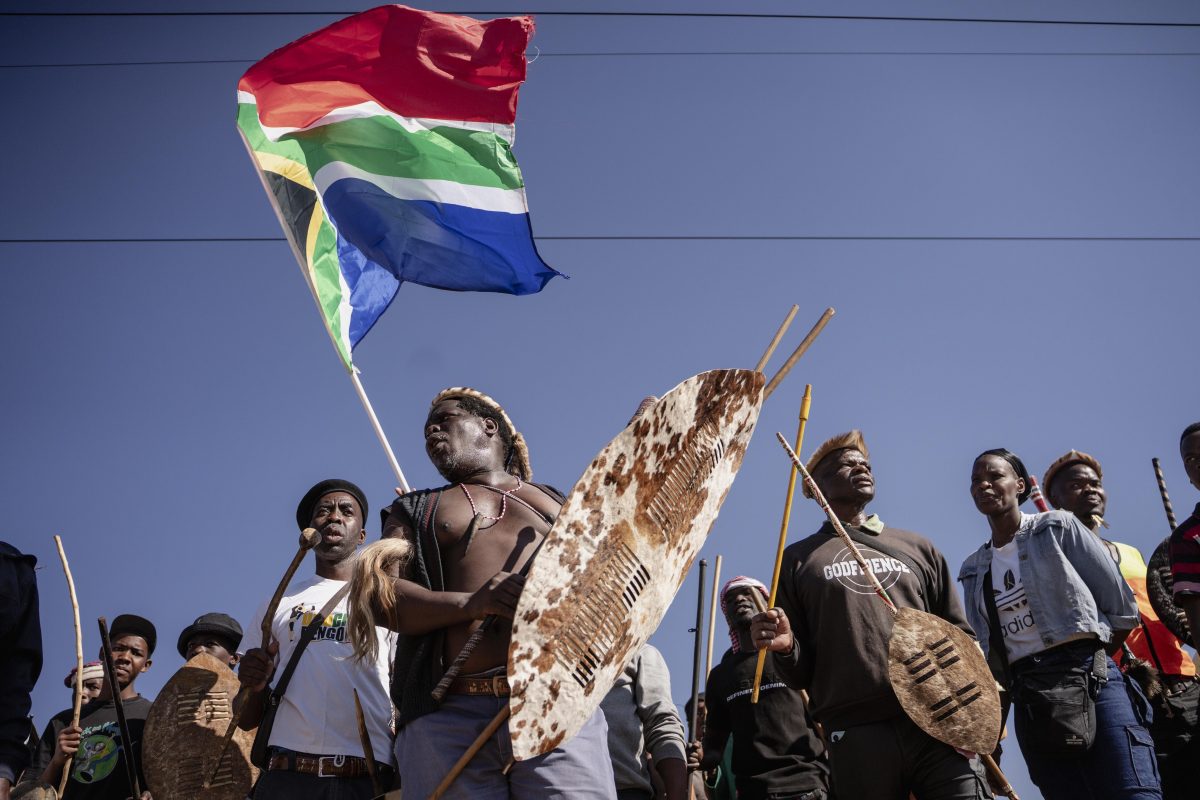 ©picture alliance / Anadolu | Ihsaan Haffejee
In Johannesburg, Malawian gardener Kaunga Nyirenda has been living in fear for weeks. He tells his story to CNN World. In early June, two men suddenly showed up at his door and demanded that he leave the country. “When are you leaving? We want to solve the problems in our country. If you don’t leave now, you’ll leave in a coffin, because after June 30, we won’t need anyone anymore,” they told him. So goes the shocking testimony of gardener Nyirenda to CNN World. It turns out this is not an isolated incident. A movement that opposes migrants and does not shy away from violence is rapidly gaining popularity in South Africa.
Across South Africa, hostility toward migrants has been growing for months, and those tensions have escalated in recent weeks. Groups such as March & March and Operation Dudula are carrying out actions against foreign residents; officially, they do not advocate violence, but in practice, according to aid organizations and witnesses, their protests contribute to the intimidation, attacks, and expulsion of both documented and undocumented migrants.
Deadline has now passed
The government in Pretoria has set a self-imposed “deadline” of June 30. President Cyril Ramaphosa warned that the state will not tolerate any attempt to destabilize the country and emphasized that attacks on foreigners “do not reflect South Africa’s vision.” At the same time, he acknowledges that illegal migration is a real problem, as it puts pressure on public services and disrupts the labor market. Yet for many migrants, this provides little reassurance. Violence was recently reported in several provinces, with fatalities in Mossel Bay and Pietermaritzburg, among other places. Mozambique later reported that five of its citizens were killed in what it called “xenophobic attacks.” Meanwhile, hundreds of people sought shelter in churches, mosques, or temporary shelters, while others packed their belongings and prepared for a forced departure.
What now?
The anti-immigration campaign relies on the familiar but dangerous narrative that foreigners are taking jobs, fueling crime, and draining social services. Migrants from Malawi, Zimbabwe, Mozambique, Ghana, and Nigeria are particularly targeted. According to Reuters, the movement has gained significant visibility through social media and street protests, with figures like Nkosikhona Ndabandaba— who presents himself as the architect of the deadline—mobilizing thousands of followers.
Behind the anger lies more than just migration. South Africa is grappling with unemployment, inequality, corruption, and inadequate public services. According to analysts, migrants are therefore repeatedly made scapegoats for structural problems that run much deeper. Moreover and according to CNN, this outbreak of xenophobia is part of a long and bloody history: the 2008 riots claimed at least 62 lives, and there were also fatalities in 2015 and 2019.
And let’s return briefly to Nyirenda, who has lived in South Africa for 16 years and shared his story with CNN World. He has decided to return to Malawi. “Why fight against someone who is just as poor as you, while the truly wealthy remain out of the line of fire?” he wondered.
©picture alliance / Anadolu | Ihsaan Haffejee