
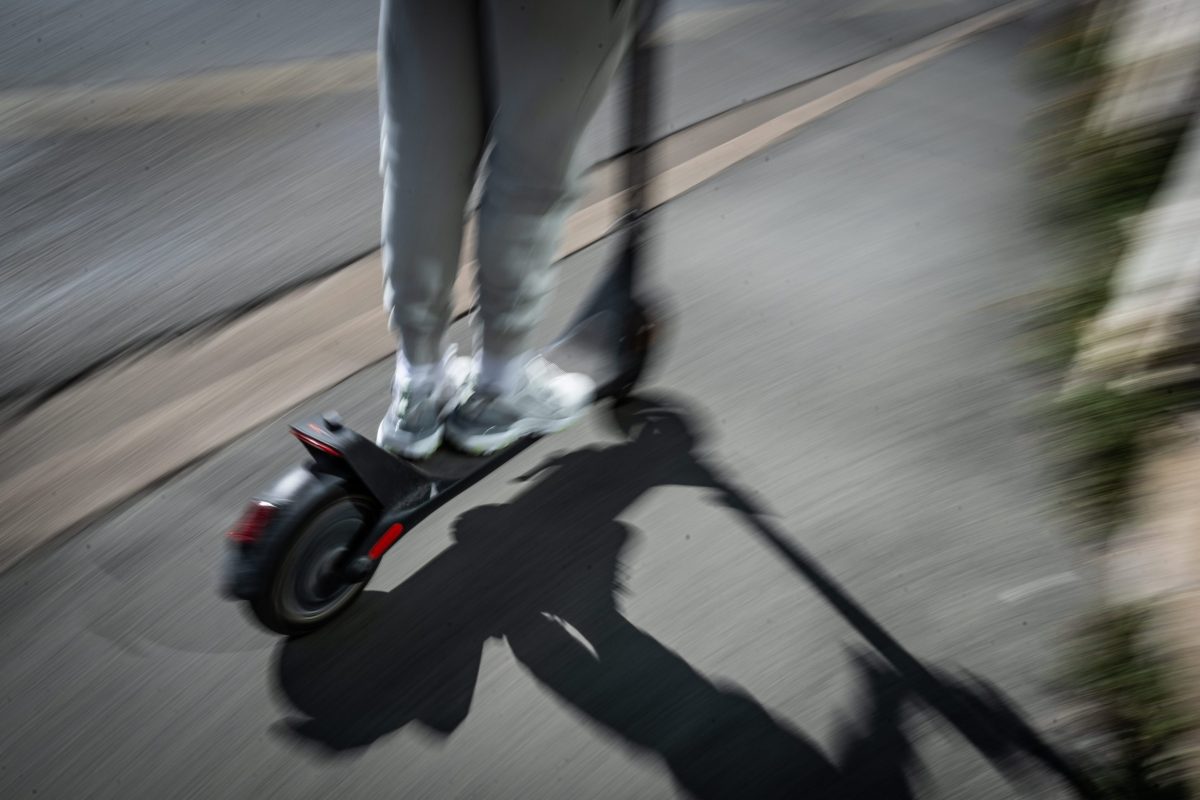
 © picture alliance / PHOTOPQR/SUD OUEST/MAXPPP | XAVIER LEOTY
Following Paris, Madrid, and Prague, Brussels has now also decided to ban shared e-scooters. The contracts of the current providers, Bolt and Dott, run until the end of 2026 but will not be renewed.
Not only do shared e-scooters often pose an obstacle to other road users when left haphazardly, they also pose a danger to the users themselves: last year, 666 people were injured in the Brussels-Capital Region following an accident involving an e-scooter.
These are just two of the reasons why the current concessions will not be renewed. The minister responsible, Minister of Mobility Elke Van den Brandt (Groen), wants to focus on a safer alternative: shared bicycles. The current concession for the Villo! service, operated by JC Decaux, expires in September 2026.
"The decision to ban shared e-scooters from the Brussels cityscape is part of a clear and coherent policy. Shared e-scooters are often synonymous with disorder, cause nuisance, lead to serious injuries, clog the streets, and are unfortunately increasingly used by organized crime… Shared bicycles, on the other hand, remain an indispensable part of our mobility policy," said Brussels Minister-President Boris Dilliès (MR) on the Belgian French-language public broadcaster RTBF.
Current shared e-scooter providers have reacted with disappointment to the news.
“E-scooters have become a mainstay of urban mobility, even in neighborhoods with poor public transportation,” Dott stated in a press release in response to the phase-out of shared e-scooters in Brussels starting in 2027. "Dott wishes to express its sympathy for the victims of the tragic accidents that have recently been in the news. However, these incidents did not involve shared e-scooters but were traffic accidents. Users of bicycles and scooters remain vulnerable compared to cars and trucks. Should we therefore ban cars?"
Bolt, the other provider, echoes this sentiment. Bolt highlights the difference between privately owned electric scooters and shared e-scooters: "Privately owned scooters are unregulated, untraceable, and not supervised by an operator. Shared e-scooters are exactly the opposite: they are limited to 20km/h, are continuously tracked via GPS, every ride is recorded, and the operators regularly respond to official requests from the police. As for parking, contrary to popular belief, more than 90% of Bolt’s e-scooters are parked correctly in Brussels, according to data from Brussels Mobility.”
According to Bolt, the ban will encourage users to turn to “private e-scooters, which are unregulated, untraceable, and downright dangerous, or (to) modes of transportation that cause more pollution.”
Picture: © picture alliance / PHOTOPQR/SUD OUEST/MAXPPP | XAVIER LEOTY