
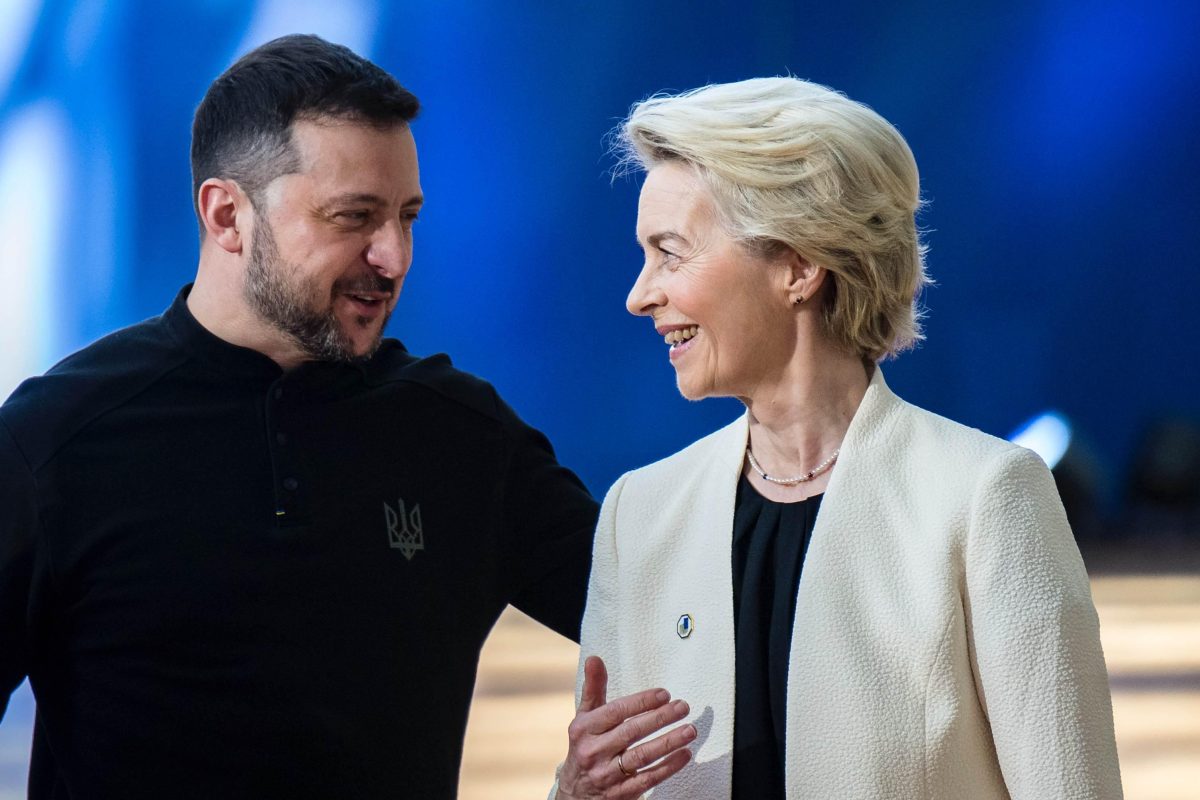
 © picture alliance / Wiktor Dabkowski | Wiktor Dabkowski
On Friday, the European Union gave the green light to officially begin accession negotiations with Ukraine and Moldova. These will start on Monday with a first, politically sensitive chapter on the rule of law, the fight against corruption, and budgetary control. Both countries hope to make rapid progress, but actual accession is not expected for at least five years.
"The Cypriot presidency is proud to have helped bring about this historic moment. As the presidency, we have worked intensively to achieve this result," Cyprus, as the current president of the Council of the European Union, announced on X upon the opening of Cluster 1 of the accession conference with Ukraine and Moldova on June 15.
"This is a milestone and a recognition of the ambitions, resilience, and commitment of the two candidate countries that have chosen Europe and its values. As we take this important step together, we reaffirm that the European Union is at its strongest when it is united and principled, and open to those who commit to its values."
The decision follows Hungary’s lifting of its previous veto. That veto had blocked the start of negotiations for two years, despite broad support within the EU. Behind the scenes, preparations had already begun, allowing Ukraine and Moldova to implement reforms.
For Ukraine in particular, the start of negotiations holds great symbolic value, as the country is still defending itself against Russia and views EU membership as a strategic end goal. Ukraine and Moldova applied for membership in 2022, shortly after the Russian invasion, and were granted candidate status that same year.
The accession process is complex and lengthy: candidate countries must adopt all EU legislation, divided into several negotiation clusters. In total, there are six clusters covering some thirty topics. Each step requires approval from all member states. In addition to the negotiations themselves, which can take five to ten years, a ratification process follows.
Meanwhile, Brussels is considering intermediate forms, such as limited “associate membership,” to make the long waiting period more bearable for candidate countries. In addition to Ukraine and Moldova, Albania, Serbia, Georgia, Kosovo, Bosnia, North Macedonia, and Turkey have also expressed interest in joining the European Union.
Accession talks are already well advanced for Montenegro. According to EU diplomats, that Balkan country could join the EU in 2030.
Picture: © picture alliance / Wiktor Dabkowski | Wiktor Dabkowski